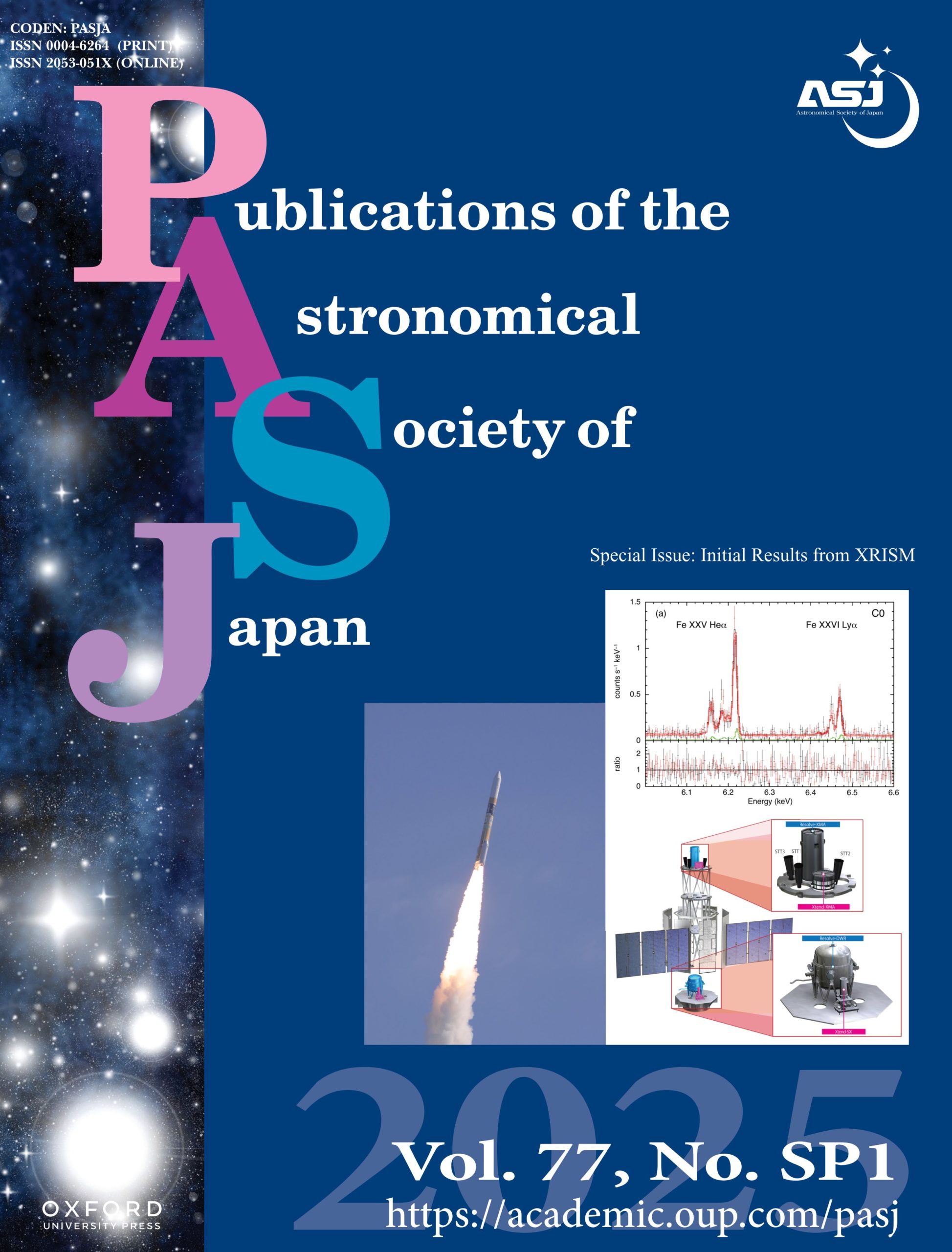
The PASJ ( Publications of the Astronomical Society of Japan) special issue on XRISM has been published.


The PASJ ( Publications of the Astronomical Society of Japan) special issue on XRISM has been published.

A fast starburst wind consumes most of the energy from supernovae
In starburst galaxies, numerous supernova explosions associated with intense star formation heat the gas in the central regions to temperatures high enough to emit X-rays. This hot gas acts as the driving source, pushing and entraining surrounding material to produce a fast outflow (a galactic wind*4; see Fig. 1). This flow can include components that remain within the galaxy, as well as components that escape into intergalactic space. Such flows transport matter and energy―including heavy elements produced inside stars―between the interior and exterior of galaxies and play an important role in galaxy evolution and the matter cycle in the Universe. However, previous observations have mainly traced the motion of entrained material, and direct measurements of the motion of the driving hot gas have been difficult. Consequently, it has remained a long-standing challenge to observationally determine how much supernova energy is stored in hot gas and how much material is driven out of galaxies.

A Glimpse into Low-Ionization Iron Ions Revealed by High-Resolution X-ray Spectroscopy of Fe K Lines
The Fe Kα fluorescence line emitted when cold gas is irradiated by high-energy X-rays has long been used as a powerful diagnostic to probe the distribution and physical state of matter surrounding X-ray sources such as black holes and neutron stars. Using XRISM, we have revealed for the first time that the Fe Kα line detected from the accretion-powered pulsar Centaurus X-3 originates not from neutral iron atoms, but from low-ionization iron ions in which approximately five electrons have been removed.
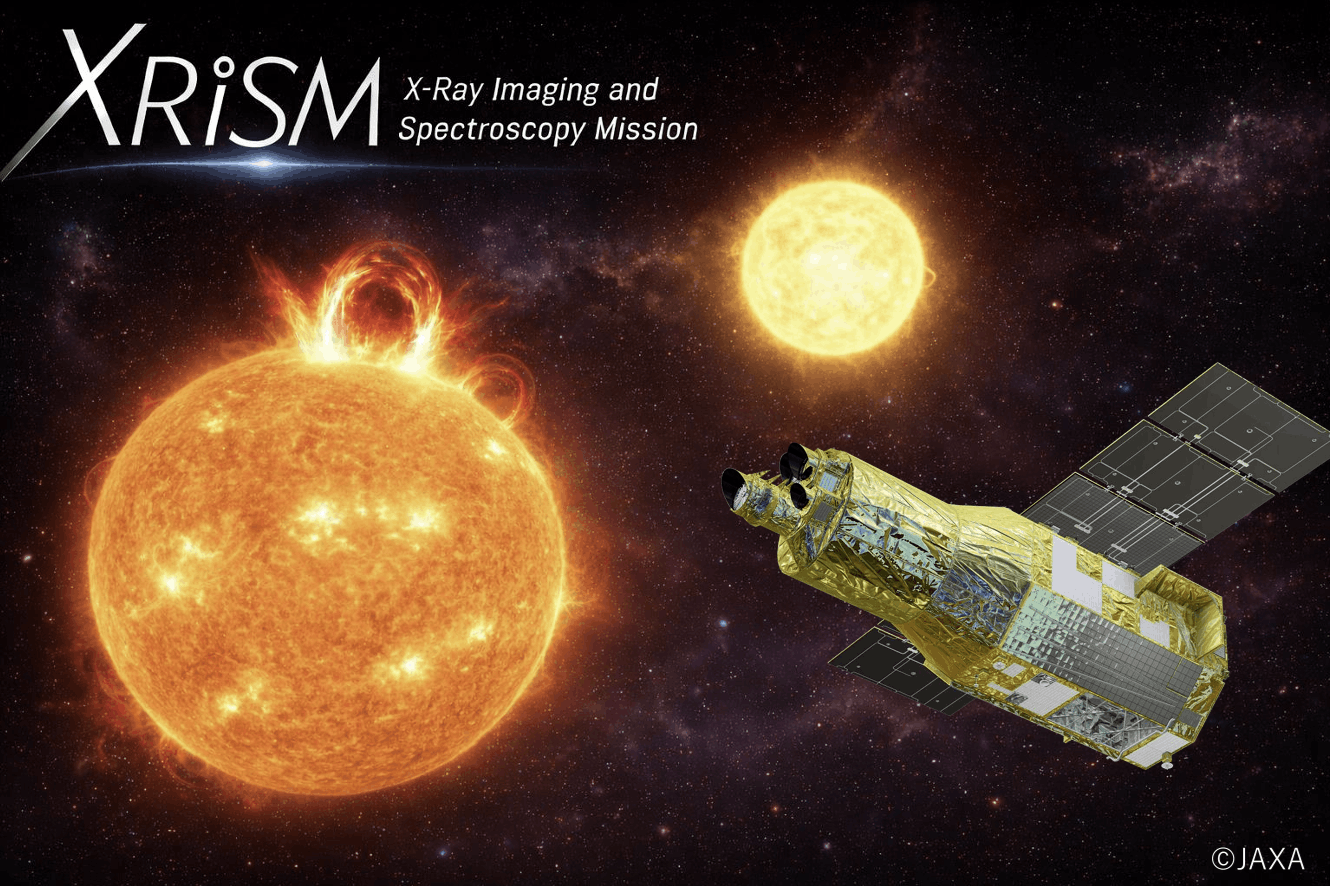
XRISM view of giant stellar flares: Plasma diagnostics with high-resolution X-ray spectroscopy
Active stars, such as RS CVn-type binaries*1, are known to produce flares*2 that are orders of magnitude larger than those observed on the Sun. These stellar flares are important targets for studying their energy release mechanisms and the impact on the surrounding environment. In this study, we report the first detection of stellar flares with the X-Ray Imaging and Spectroscopy Mission (XRISM)*3, based on observations of two RS CVn-type systems.